
In automotive collision repair, marine vessel recoating, and commercial fleet painting, surface masking is one of the most labor-intensive stages of the refinish process. While achieving precision tape lines around door jambs and glass trim is essential, protecting large non-painted vehicle areas from airborne overspray drift accounts for up to 70% of total prep time. However, one of the most frustrating and costly defects in a modern spray booth is “paint flaking”—when dried overspray from primer, basecoat, or clear coat shears off the protective plastic sheet and migrates directly onto wet panels, creating immediate surface nibs and requiring hours of corrective color sanding.
To systematically eliminate paint flaking and optimize workshop throughput, commercial facilities must understand the surface physics of an engineered disposable Paint Masking Film Product and why standard drop cloths fail in industrial paint environments.
1. The Physics of Surface Energy and Corona Discharge Treatment
High-density polyethylene (HDPE) in its raw, untreated state is inherently non-polar and possesses very low surface energy (typically between 30 and 32 dynes/cm). In contrast, modern solvent-borne and waterborne automotive coatings have dynamic surface tensions that prevent them from wetting out or anchoring mechanically onto untreated plastic. When overspray mist hits plain plastic sheeting, it forms discrete droplets that dry rapidly under booth ventilation airflow into a brittle, unbonded film. During subsequent spray coats or bake cycles, the slightest air movement causes this brittle paint layer to crack and shed dry paint flakes onto wet clear coats.
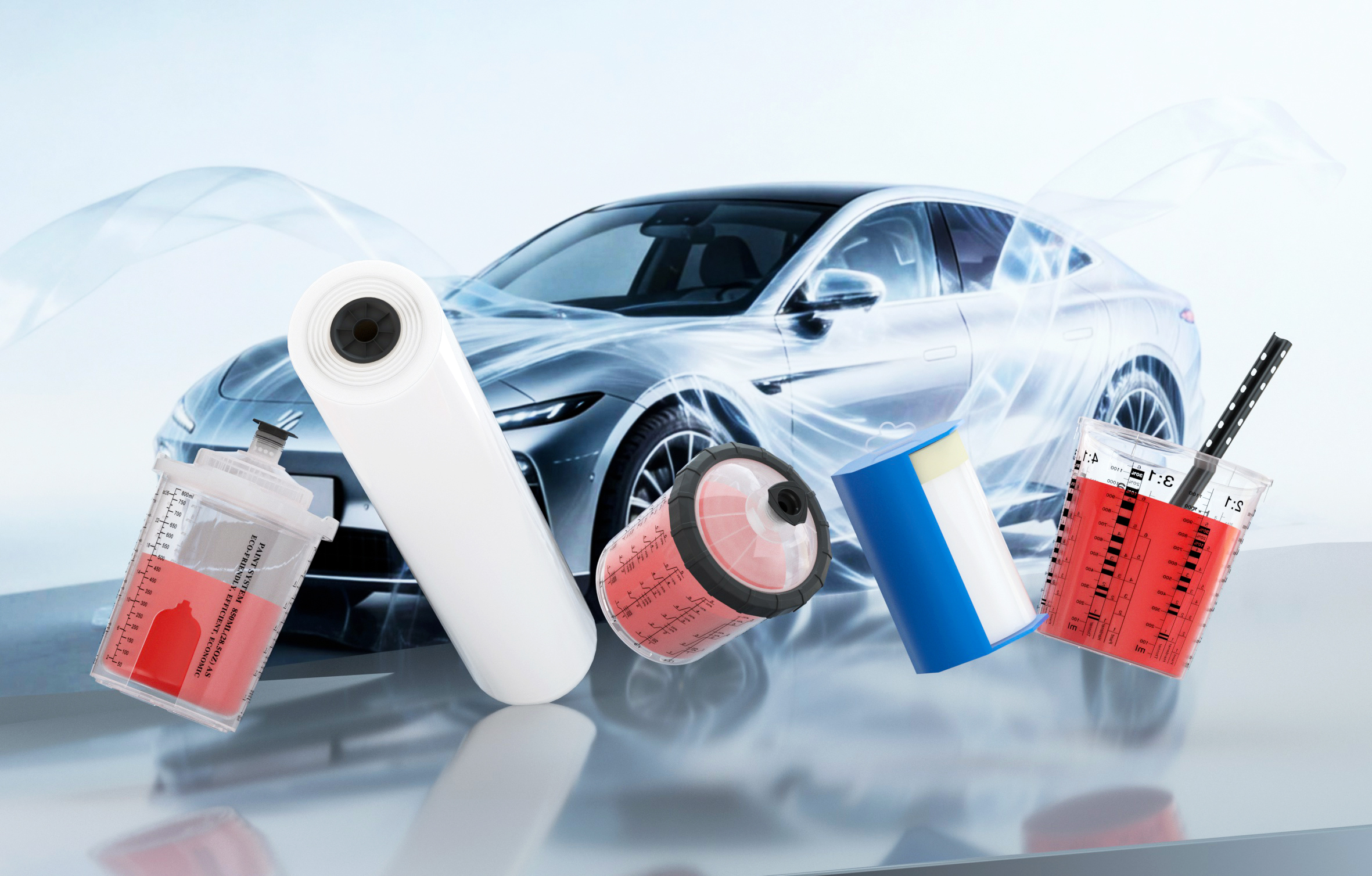
Upgrading to professional-grade Car Painting Masking Plastic resolves this surface defect through specialized corona discharge treatment during extrusion:
-
Electron Bombardment and Molecular Oxidation: During the manufacturing process at QINGDAO AOSHENG PLASTIC CO., LTD, the extruded HDPE film passes through a high-voltage, high-frequency electrical corona discharge field. This process ionizes the surrounding air molecules and bombards the film surface, breaking molecular hydrocarbon bonds and introducing polar functional groups (primarily hydroxyl, carbonyl, and carboxyl groups).
-
Elevated Dyne Surface Energy: The corona treatment elevates the film’s surface energy to a minimum of 42 to 44 dynes/cm. This high surface energy allows liquid overspray to wet out completely and form a robust chemical and mechanical bond with the plastic substrate.
-
Permanent Paint Flake Anchorage: Once dry, paint overspray, clear coat mist, and primer dust remain locked permanently to the film. Even when the plastic is buffeted by turbulent spray booth downdraft airflow or handled during panel unmasking, dry flakes will not shed off onto fresh paintwork.
2. Static Cling Dynamics and Single-Operator Efficiency
Beyond paint anchorage, labor speed during vehicle preparation is a critical benchmark for body shop profitability. Traditional paper masking is heavy, requires multiple overlapping layers, and demands two technicians to handle wide vehicle roofs and commercial van flanks.
Engineered polyethylene masking film integrates permanent electrostatic charging during production:
-
Immediate Vehicle Contour Hugging: As the folded film is deployed from the dispenser, the static charge causes it to cling tightly to vehicular steel, aluminum, glass, and composite panels. The film pulls itself flat against body contours, wheel arches, and hood recesses without billowing under booth air draft.
-
Single-Operator Deployment: A single prep technician can roll out, align along the vehicle center line, unfold, and secure an entire passenger sedan or SUV in less than three minutes, cutting masking labor time by more than 50% compared to paper roll methods.
-
Center-Line Alignment Printing: High-quality masking films feature a continuous center-printed guide stripe. This visual indicator allows technicians to align the film perfectly along the vehicle roofline and bumper center points, ensuring balanced drape coverage on both sides without manual readjustment.
3. Integrated Edge Protection with Pretaped Masking Film
For localized repair areas—such as bumper spot repairs, door moldings, rocker panels, and wheel arches—deploying large-format drop sheets is often inefficient. Modern high-efficiency collision centers utilize pretaped masking film to accelerate targeted masking cycles:
-
Co-Extruded Two-in-One Architecture: This product combines premium automotive-grade crepe paper masking tape (engineered to withstand bake cycles up to 110°C / 230°F without adhesive residue) directly bonded to a roll of corona-treated, static-cling HDPE film.
-
Sharp, Razor-Clean Paint Edges: The integrated tape provides razor-sharp separation lines, preventing solvent bleed-through and adhesive transfer, while the folded film unfolds instantly to protect adjacent panels from overspray mist.
-
Rapid Cleanroom Dispensing: Available in compact rolls with paper cores, technicians can dispense, cut, and apply targeted masking in a single continuous hand motion, eliminating the need to hold separate tape rolls and paper sheets simultaneously.
4. Solvent Impermeability and High-Temperature Thermal Resistance
In modern baking spray booths, vehicles are routinely subjected to high-temperature infrared curing cycles and convection bake stages ranging from 60°C to 80°C (with localized infrared reaching up to 110°C). Inferior low-density polyethylene (LDPE) films or fibrous masking papers can soften, bleed solvent onto clear coats, or leave milky “ghosting” moisture patterns on vehicle panels.
Our co-extruded high-density masking films are formulated with virgin HDPE resins and specialized thermal stabilizers:
-
Chemical and Solvent Barrier: The dense polymer matrix acts as an impermeable barrier against aggressive solvents, polyurethane reducers, and waterborne moisture, preventing chemical strike-through to sensitive OEM paintwork.
-
Anti-Ghosting Properties: The breathable, micro-engineered film structure prevents condensation and solvent vapor entrapment between the vehicle body and the plastic sheet, eliminating ghosting defects on newly cured clear coats.
-
Tear and Puncture Resistance: High-tensile extrusion ensures the film resists punctures from sharp vehicle badges, side mirrors, and bumper clips during fast-paced application.
5. Factory-Direct Global Supply with QINGDAO AOSHENG PLASTIC CO., LTD
As a specialized, large-scale manufacturer of surface preparation consumables, QINGDAO AOSHENG PLASTIC CO., LTD operates automated multi-layer film blowing lines and high-output rewinding equipment dedicated to international distribution markets.
We maintain strict quality assurance across every production run, including continuous electronic dyne-level testing, tensile elongation verification, and thickness consistency monitoring. We provide international brand owners, refinish wholesalers, and commercial purchasing groups with private-label roll branding, customized core dimensions, reinforced export packaging, and competitive factory-direct commercial terms.
Contact our international commercial export division today to request free product sample rolls, technical data sheets, and volume-based container pricing.
Post time: Nov-07-2026