
In commercial automotive collision centers and high-volume industrial coating facilities, maintaining predictable fluid transfer efficiency directly dictates booth productivity and overall operating expenses. Traditional gravity-fed spraying setups rely on rigid aluminum or stainless-steel fluid reservoirs requiring atmospheric venting. However, these older configurations present significant drawbacks: they demand extensive manual cleaning with aggressive chemical thinners after every spray cycle, introduce contamination risks through atmospheric air vents, and restrict technician movement when spraying at severe angles.
To overcome these operational limitations, modern high-volume body shops are standardizing their paint prep stations with integrated single-use fluid delivery architectures engineered to streamline liquid transfer and eliminate cross-contamination across large-scale refinish networks.
Fluid Dynamics and Vacuum Feeding in Disposable Paint Spray Gun Cups
Transitioning from traditional vented reservoirs to modern disposable paint spray gun cups fundamentally alters the physics of fluid delivery inside the spray booth. Legacy gravity-fed cups depend on atmospheric air entering through a top vent hole to draw paint down into the nozzle. This open-vent design creates two distinct operational vulnerabilities: airborne booth dust can settle directly into the coating mixture, and tilting the equipment at sharp angles risks fluid leakage or air sputtering.
A vacuum-sealed disposable cup framework resolves these mechanical limitations through predictable atmospheric compression:
-
True 360-Degree Omnidirectional Capability: As paint is discharged through the nozzle, atmospheric pressure acts evenly against the flexible inner liner, causing it to collapse predictably. Because fluid delivery relies on a continuous vacuum seal rather than gravitational pull, the equipment functions reliably at any physical angle—including complete 180-degree inverted positions. Technicians can coat low vehicle rocker panels, intricate wheel arches, and chassis undercarriages smoothly without experiencing paint starvation, pressure drops, or fluid sputtering.
-
Absolute Isolation from Airborne Contaminants: Operating as a completely closed fluid pathway prevents shop dust, lint, and dry overspray from entering the paint reservoir during application. This reduces surface clear coat imperfections, significantly decreasing post-bake color sanding and corrective polishing hours.
Engineered Reliability of the PPS Paint Cup Adapter
Commercial collision repair facilities frequently utilize a mixed fleet of high-performance spray guns from multiple global equipment manufacturers. Achieving a secure, leak-proof connection between diverse gun models and standardized single-use lids requires a precision-machined pps paint cup adapter.
Purchasing managers must verify specific structural standards when sourcing adapters for high-volume commercial use:
-
Precision Thread Fitment: Adapters must be CNC-machined from high-grade anodized aluminum or stainless steel to match the exact thread pitch of specific spray gun models. Precise tolerances prevent thread stripping, air leaks, and fluid seepage under high spraying pressures.
-
Chemical and Corrosion Resistance: Anodized surface finishes protect the metal against aggressive solvent-based basecoats, rapid activators, and polyurethane topcoats, ensuring long-term operational durability across continuous shifts.
-
Positive Quick-Lock Mechanism: The connection interface between the adapter and the disposable cup lid features a heavy-duty locking design that prevents accidental cup detachment under full fluid weight or during rapid lateral movements across large vehicle panels.
Integrated Micro-Filtration and Process Standardization Across Paint Cup Systems
Quality control in surface finishing depends heavily on eliminating particulate contamination before material exits the fluid nozzle. Comprehensive commercial paint cup systems produced by QINGDAO AOSHENG PLASTIC CO., LTD integrate chemically bonded mesh strainers—typically 125-micron for basecoats and 190-micron for primers and clear coats—directly into the fluid channel. This forces every milliliter of paint through a fresh, sterile filter immediately prior to atomization, bypassing manual straining steps and eliminating the recurring cost of external paper funnel strainers.
Furthermore, consolidating preparation, measurement, and spraying into a single vessel assembly yields measurable operational savings for high-volume operations:
-
Elimination of Transfer Waste: Closed single-unit systems eliminate intermediate transfer loss, reducing cumulative paint retention waste by up to 15% per mix.
-
Solvent Reduction: Eliminating rigid aluminum cup washing reduces thinner consumption for gun cleaning by up to 70%, lowering solvent procurement costs and reducing environmental disposal compliance fees.
-
Preservation of Leftover Chemistry: Sealing plugs inserted directly into the cup lid allow unspent basecoats or clear coats to be saved safely inside the liner for subsequent panel touch-ups, preventing the immediate disposal of expensive coatings.
Global Distribution Supply with QINGDAO AOSHENG PLASTIC CO., LTD
For international paint wholesalers, regional refinish distributors, and industrial buying groups, maintaining inventory stability is critical to avoiding downtime across local collision networks. QINGDAO AOSHENG PLASTIC CO., LTD operates automated, large-scale manufacturing facilities specialized in producing export-grade surface preparation consumables and spraying supply systems.
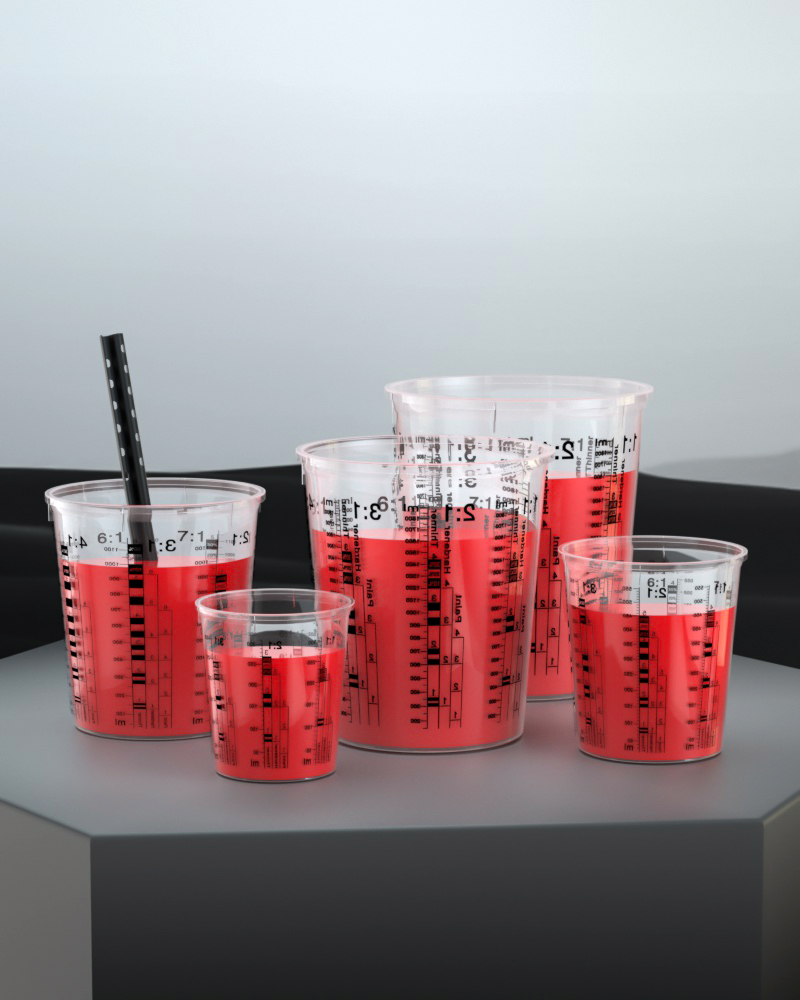
Our factory maintains strict dimensional tolerances, permanent chemical-resistant graduate printing, and heavy-duty export packaging designed to withstand ocean freight shipping and stacked warehouse logistics. By establishing direct factory partnerships, global buyers secure reliable product consistency, guaranteed production lead times, and competitive wholesale pricing structures necessary to maintain strong local market margins.
Contact our international commercial export team today to request complete compatibility charts, physical product specification sheets, and volume-based factory direct quotation schedules.
Post time: Sep-24-2026